




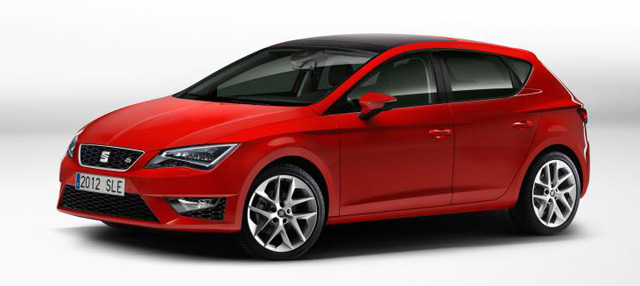
SEAT has revealed its stunning third-generation Leon. Completely redesigned from the chassis up, the new model comes with innovative technologies, advanced infotainment systems, sophisticated driving aids and engines that are among best-in-class for efficiency and emissions.
The next generation Leon is more compact than its predecessor and yet more spacious too. The premium materials and the level of craftsmanship place the model at the forefront of the competitive field.
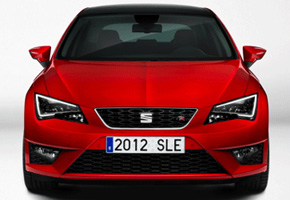
The availability of full-LED headlamps for the new Leon is a first in the family hatchback class, combining striking design with exceptional illumination.
Under the bonnet, the 1.6 TDI engine with start/stop has an average fuel consumption of 74.3 mpg and a CO2 figure of just 99 g/km.
“New Leon brings quality and technologies from the full-size class into the compact segment,” said James Muir, President of SEAT S.A. “The Leon is a decisive step in SEAT’s brand and growth strategy. The five-door version will launch first, towards the end of this year.”
Keep me informed
Customers can sign-up for news about the next generation Leon by registering their interest on seat.co.uk. News about the model can also be found on SEAT UK’s Facebook page.
Design: simply stunning
“Thanks to its dynamic and assured character, the new Leon inspires a self-confident stance. It has a decisive look,” says Alejandro Mesonero-Romanos, Head of SEAT Design.
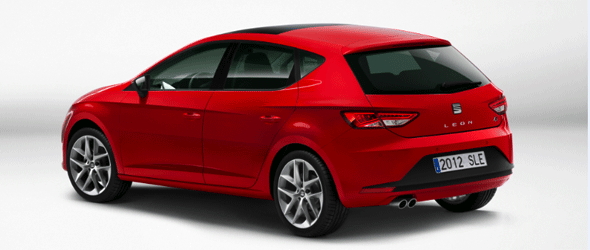
He adds: “It is extremely well proportioned, with a slight shift of the visual weight of the cabin over the rear wheels, while keeping a very fluid transition between the front wing and the cabin. Its character lines show pure assertiveness, like for instance the outer shape of the headlamps and tail lamps.”
At 4.26 metres long, the new Leon is around five centimetres shorter than its predecessor, yet the wheelbase is up by almost six centimetres. This clever packaging enables short overhangs and enhances the strong visual presence of the wheels, while giving practical benefits such as improved interior space, particularly for rear-seat passengers, as well as in the luggage compartment.
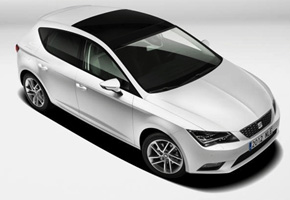
The angular line of the headlamps is a typical feature of the new SEAT design language. Full-LED lights are available for the first time in the compact class. The new headlamps give an unmistakable look to the front end of the Leon. Additionally, the new Leon now has a distinctive signature appearance thanks to the fitment of LED daytime running lights.
From the side, the new Leon looks like a precisely executed sculpture on wheels. The characteristic, unbroken ‘Línea Dinámica’ runs rearwards over the wheel arches. It is reminiscent of the tension of a well-trained muscle. The trapezoidal C-pillars are characteristic to the Leon, as are the short, upwards-pointing third windows.
The rear end of the new Leon has been intensively modelled; the large logo serves as an opener for the rear hatch. The slightly wedge-shaped rear light clusters highlight the car’s width and are also available in LED technology.

The interior: comfortable and premium
The interior of the new Leon has a clear, light and uncluttered look. The dashboard is unconventional and elegant, with a two-tone design that makes it appear to float in mid-air. Fine details underscore the Leon’s high standard of craftsmanship, such as the large air vents, the controls for the air conditioning and the three-dimensional form of the trim elements. The luggage compartment has a volume of 380 litres, which is around 40 litres more than the outgoing model.
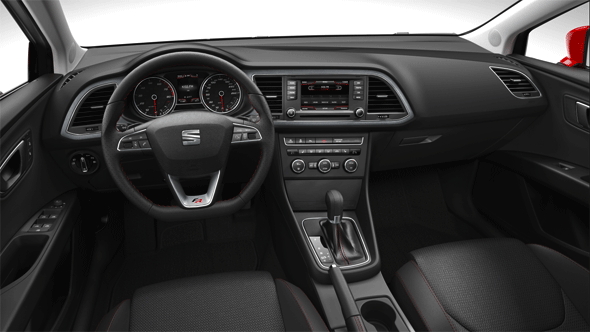
Describing the interior, Mesonero-Romanos said: “The quality of the material, the fit and finish and the attention to details is at least as good as you can find in the segment above.
“The design of the dashboard respects our new interior philosophy, with a strong driver orientation. This enhances the ergonomics while giving the design an attractive, sporty feeling. The whole has been designed so the new Leon and its driver feel as one.”
The body shell: lightweight and solid
The Leon uses a new vehicle architecture that enabled development engineers to position the front axle 40 millimetres further forward. The results are a longer wheelbase and a balanced distribution of axle load – factors that significantly benefit comfort and sporty handling.
Thanks to advanced construction techniques and the use of lightweight materials in the body’s manufacture, the overall weight has been reduced by 90 kilograms compared with the previous version.
Drive: powerful and efficient
The third-generation Leon will be powered by a series of powerful and fuel-efficient TDI and TSI engines, ranging from 1.2 to 2.0 litres. All engines feature direct injection and turbocharging, and have been engineered for low internal friction and fast warm-up. Compared with their respective predecessors, their fuel consumption is down by up to 22 percent.
The 1.6 TDI generates 105 PS and 250 Nm (184 lb.ft) of torque. In the Ecomotive version with start/stop system and brake energy recuperation, it returns an astonishing 74.3 mpg on average, equating to just 99 g/km CO2*. The extensively re-engineered 2.0 TDI returns a hugely impressive 70.6 mpg* in the Ecomotive version, yet develops 150 PS and 320 Nm (236 lb.ft) of torque. It is a powerful driving force for the Leon.
SEAT will rapidly expand the engine line-up. Early 2013 will see the arrival of the 1.2 TSI in two versions with 86 PS and 105 PS; a 1.4 TSI with 122 PS; and at the top of the petrol range, a 1.8 TSI with 180 PS and a combination of direct and manifold injection. The diesel line-up will be augmented by the 1.6 TDI with 90 PS and a powerful, range-topping 2.0 TDI with 184 PS. It delivers a maximum torque swell of 380 Nm (280 lb.ft).
Depending on the engine, transmission options range from five- and six-speed manual gearboxes or the renowned six- and seven-speed DSG dual-clutch gearboxes.
The chassis: dynamics with comfort
The new Leon’s chassis scores high for its sporty and agile character. Its front suspension features a MacPherson front axle with sub-frame, while the rear uses torsion beam suspension for engines up to 150 PS (148 bhp). More powerful variants use a multi-link construction that handles longitudinal and transverse loads discretely.
The new SEAT Drive Profile for the Leon FR allows the driver to vary the characteristics of the power steering, throttle control and engine sound (FR versions only) via a sound actuator using three modes: eco, comfort and sport. There is also a facility to tailor the settings according to the driver’s preference. The interior ambient LED lighting changes according to the selected setting: white in eco and comfort modes, and red in sport.
Infotainment: modern and flexible
In the new Leon, SEAT offers a full range of up-to-date infotainment systems. The basis is formed by the Easy Connect operating system, which controls the SEAT Sound System entertainment and communication functions, as well as a wide array of vehicle functions, via a touch-sensitive screen in the cockpit.
The entry level* is the Media System Touch, which includes a CD radio with an SD card slot, four speakers and a five-inch touch screen. Media System Colour features more in-screen colours and higher quality, with a CD drive and six speakers as standard (eight speakers in the FR). It connects external devices via Bluetooth, USB or aux-in. Its five-inch colour touch screen also controls vehicle functions.
(*UK trim levels TBC)
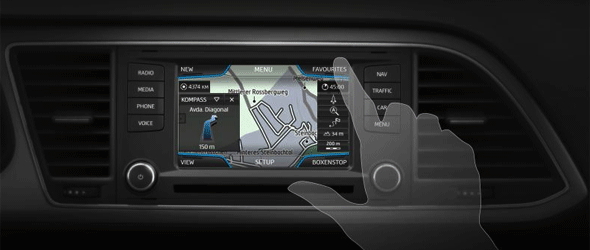
The Media System Plus has a 5.8-inch touch screen with three-dimensional graphics in high definition, iPod connectivity, an optional DAB tuner, and voice recognition. The system comes with eight speakers. This system incorporates the navigation system, which also shows navigation information in the colour display between the speedometer and rev counter and can be controlled by voice recognition. The SEAT Sound System has a clear, crisp sound reproduction thanks to its 10-speaker and sub-woofer set-up.
Driver assistance systems: groundbreaking
The new Leon sets benchmarks when it comes to the available driver assistance systems. The drowsiness detection feature recognizes when the driver is losing concentration and suggests taking a break. Additionally, an advanced camera mounted behind the rear-view mirror manages both the Full Beam Assistant, which switches automatically between full and dipped beam, and the ‘Heading Control’ lane-keeping assistant, which makes slight corrections to the electro-mechanical power steering to prevent the driver from crossing over lane markings.
New SEAT logo
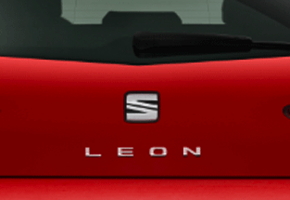
Another all-new element of the Leon is the logo on its grille, rear and steering wheel. The Leon will be the first car to wear the company’s newly refreshed badge.
Sporting a cleaner, purer design, the new SEAT logo represents the precision and elegance of the brand’s design language, while also reflecting the company’s engineering and quality leadership. The introduction of the new SEAT logo across all of the company’s visual material and locations will begin from the Paris Motor Show in September 2012.